
Before You Hand Over Your Keys: 9 Questions to Ask a House Clearance Company in London
Handing over your keys to a house clearance company in London requires more thought than simply finding someone with a van. Whether you are preparing a property for sale, clearing an inherited home or moving out of a rented flat, you need to know that your belongings will be handled carefully and your waste disposed of legally.
A cheap quote can quickly become an expensive mistake if the company lacks proper registration, adds unexpected charges or leaves unwanted items behind. Before confirming your booking, ask these nine questions to understand exactly who you are hiring and what you can expect.

Why Choosing the Right House Clearance Company Matters
A house clearance often involves more than removing unwanted furniture. It may include electrical appliances, personal documents, garden waste, heavy furniture and items that need specialist disposal.
There are also practical challenges. Narrow staircases, limited parking, shared entrances and strict property handover dates can make a London clearance more complicated than expected.
Choosing a reliable provider helps you avoid unnecessary delays, unexpected costs and potential waste disposal problems.
9 Questions to Ask Before Booking a House Clearance Company in London
1. Are You a Registered Waste Carrier?
This should be one of your first questions.
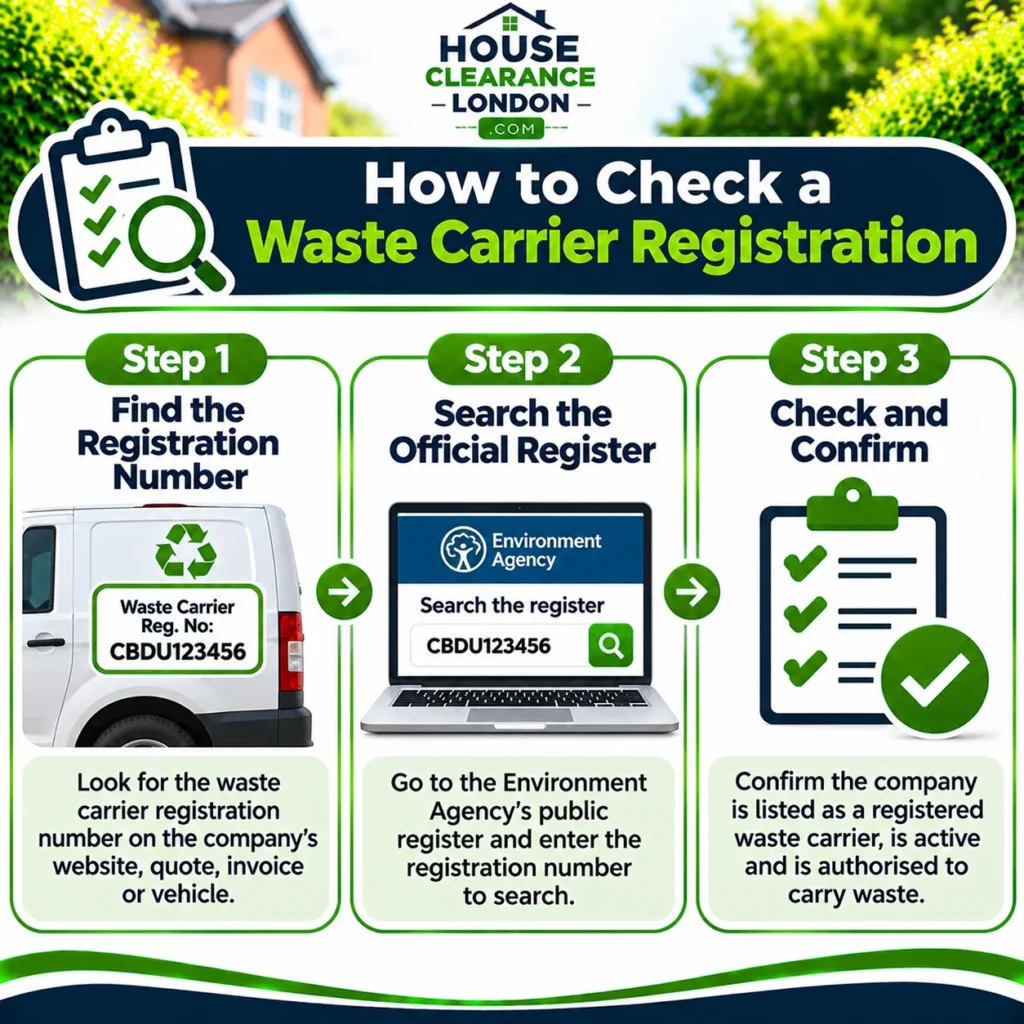
In England, businesses transporting other people’s waste generally need appropriate waste carrier registration. The Environment Agency maintains a public register where you can check a company’s details.
Ask for its registration number and verify it using the official Environment Agency waste carrier register.
Why does this matter? If your waste is handed to an unauthorised operator and later found fly-tipped, you could face enforcement action if you failed to take reasonable steps to check the carrier.
Never choose a company simply because it offers the cheapest price or promises free collection.
2. Are You Fully Insured?
House clearance involves lifting heavy furniture, carrying appliances and moving bulky items through doorways and staircases.
Accidents can happen, particularly in older London properties with narrow hallways or shared access areas.
Ask whether the company has suitable public liability insurance and whether its cover is appropriate for the work being undertaken. Request confirmation of the insurance details before booking.
A professional provider should be willing to explain what its insurance covers rather than giving a vague assurance.
3. What Exactly Is Included in Your Quotation?
A low initial price does not always mean a cheaper clearance.
Ask whether the quotation includes labour, loading, transportation and disposal costs. Also check whether additional charges could apply for stairs, difficult access, parking arrangements or extra loads.
Some companies quote based on the volume of items, while others consider labour and access requirements.
For example, clearing a ground-floor flat with a few pieces of furniture is very different from emptying a three-bedroom house with a full loft and garage.
Request a written quotation that clearly explains the agreed work and final price.
4. Do You Recycle or Donate Reusable Items?
Not everything removed from a property needs to become waste.
Furniture, household goods, clothing and other usable belongings may be suitable for donation or reuse. Other materials may be recyclable through appropriate facilities.
Ask what happens to your belongings after collection. Does the company separate reusable items, recycle suitable materials and dispose of the remaining waste responsibly?
This is particularly important when clearing an inherited property or a home containing furniture that could still benefit someone else.
A responsible clearance provider should explain its disposal process without making unrealistic recycling promises.

5. Can You Handle Items That Need Specialist Disposal?
Some household items cannot simply be loaded into a van with ordinary furniture.
Asbestos, hazardous chemicals and certain paints or solvents may require specialist handling and disposal arrangements.
Ask the company which items it accepts and whether anything needs to be removed by a specialist contractor.
Be especially careful with old insulation, unknown chemical containers and materials that may contain asbestos. Do not allow anyone to disturb suspicious materials before their nature has been established.
Providing an accurate inventory before the clearance helps prevent delays and unexpected arrangements.
6. Can You Meet My Property Handover Deadline?
Timing can be critical when selling a house, ending a tenancy or preparing a property for its next occupant.
Ask whether the company can meet your preferred date and how much notice it normally needs.
If you need an urgent collection, check whether same-day or short-notice appointments are genuinely available. Do not assume availability until the company confirms your booking.
Also discuss what happens if the clearance takes longer than expected or requires another visit.
A clear schedule helps you coordinate the clearance with estate agents, landlords, solicitors and property managers.
7. How Do You Protect the Property During Clearance?
Removing heavy furniture can damage floors, walls, doorframes and communal areas if the work is poorly organised.
Ask how the team handles large items, narrow staircases and shared entrances. Find out whether they have a plan for dismantling furniture where necessary and moving items safely.
For flats and mansion blocks, also discuss lift bookings, building access rules and loading arrangements.
London Councils provides guidance on loading restrictions, including restrictions on red routes and controlled parking areas. These practical details should be considered before clearance day.
8. Will I Receive Confirmation of Where My Waste Goes?
Responsible disposal should not end when the van leaves your property.
Ask how the company manages collected waste and whether it can explain the facilities or routes used for disposal and recycling.
You should also request a receipt or written confirmation of the collection. The company should be able to provide its relevant business and registration details.
For household waste, the collector is responsible for completing the appropriate waste transfer documentation. You should not confuse this with the separate record-keeping requirements that apply to business waste.
Good documentation provides additional reassurance that the job has been handled properly.
9. What Happens to Personal Belongings and Items I Want to Keep?
This question is especially important for probate clearances, downsizing and properties that have been occupied for many years.
Old cupboards, drawers and storage spaces may contain photographs, jewellery, financial paperwork, family documents or sentimental possessions.
Explain clearly which items must stay and which should be removed. Ask the team how they will identify and separate anything that needs to be returned to you.
Ideally, walk through the property before work begins and agree on the clearance areas. If you cannot attend, arrange a clear written inventory and request photographs or updates where available.
Never assume that everything inside a property should automatically be removed.
How Much Does House Clearance Cost in London?
The cost of house clearance London services depends on the amount of material involved and the work needed to remove it.
Important pricing factors include:
- Volume: The amount of furniture, rubbish and other belongings being collected.
- Access: Floor level, staircases, lifts, narrow entrances and distance to the vehicle.
- Labour: The number of workers and time required.
- Specialist items: Materials or appliances requiring separate handling.
- Parking: Any additional arrangements needed for vehicle access.
Avoid accepting a vague estimate without explaining the full job. Send photographs or a short video of the property and request a detailed quotation.
House Clearance London states that its quotations consider volume, access and labour, with free quotes and no hidden charges. You can use its house clearance services to discuss your requirements.
Red Flags to Watch Out For
Be cautious if a company refuses to provide its waste carrier registration details, avoids questions about insurance or gives a price without understanding the job.
Other warning signs include pressure to pay immediately, unclear disposal arrangements and promises that sound too good to be true.
A reliable provider should explain its process, confirm the agreed price and give you enough information to make a confident decision.
Need same day house clearance in London?
Just connect with us we will get it cleared in a flash
Preparing Your Property Before Clearance
Once you have selected a company, spend some time preparing the property.
Remove personal documents, valuables, photographs and anything you want to keep. Mark items that must remain, and make sure the clearance team can identify them easily.
Share information about parking, access codes, lift bookings and restricted entry times. If the property is part of a managed building, check its clearance rules beforehand.
These simple steps can help the team work efficiently and reduce the risk of misunderstandings.

Key Takeaways
Choosing a house clearance company London homeowners can trust involves more than comparing prices.
Check waste carrier registration, confirm insurance, understand the quotation and ask how reusable items and specialist waste are handled.
Discuss access, deadlines, property protection and personal belongings before handing over the keys.
Most importantly, get the agreed work and price confirmed in writing.
If you are preparing a London property for sale, letting or a new occupant, have you asked the right questions before arranging your house clearance?
Three Checks That Take Two Minutes
First, ask for the company’s waste carrier registration number and search for it on the Environment Agency’s public register, selecting “upper tier”. Second, make sure a waste transfer note is part of the job.
Third, turn down anyone offering a cheap, cash-only house waste clearance in Whitechapel with no paperwork. A genuine licensed waste carrier in London will never mind being checked.
Frequently Asked Questions
1. How do I choose a reliable house clearance company in London?
Check the company's waste carrier registration, insurance, customer reviews and disposal practices before booking. Ask for a written quotation that explains exactly what is included in the service.
2. Does a house clearance company need a waste carrier licence?
Businesses transporting other people's waste in England generally need appropriate Environment Agency waste carrier registration. You should check the company's registration details on the official public register before handing over your belongings.
3. How much does house clearance cost in London?
The cost depends on the volume of belongings, property access, labour and disposal requirements. Request a free, itemised quotation after providing photographs or details of the property.
4. Should I get a written quotation before booking house clearance?
Yes. A written quotation helps you understand the agreed work, labour, transportation and disposal costs. It also makes it easier to identify additional charges before confirming the booking.
5. What happens to furniture after a house clearance?
Reusable furniture may be donated or passed on for reuse, while suitable materials can be recycled. Items that cannot be reused or recycled should be sent through appropriate waste disposal channels.
6. Can a house clearance company remove hazardous materials?
Not every clearance company handles hazardous materials as part of its standard service. Asbestos, certain chemicals and some paints may require specialist handling, so always disclose these items before arranging collection.
7. Do I need to be present during a house clearance?
Not necessarily. Some companies can complete a clearance when you are unavailable, provided access arrangements and instructions have been agreed beforehand. You should clearly identify anything that must be kept.
8. Can I arrange same-day house clearance in London?
Yes, some companies offer same-day or short-notice appointments, depending on crew availability and the size of the job. Contact the provider early and confirm the appointment rather than relying on an advertised availability claim.
9. How long does a full house clearance take?
The time depends on the property's size, the amount of furniture and belongings, access conditions and the number of workers. A small flat may take considerably less time than a large house with a loft, garage and garden.
10. What should I do before handing over my property keys?
Remove valuables, personal documents and sentimental belongings before the clearance begins. Agree on the items to be removed, confirm access arrangements and obtain written confirmation of the agreed work and price.

David Meadows runs House Clearance London. His team has spent more than 10+ years clearing homes, flats, offices and gardens across London, and has helped over 436+ homes and businesses so far. David makes sure every job is fully licensed and insured, priced up front with no hidden charges, and handled with care, with up to 90% of items recycled, donated or reused.