
A house clearance in London means a licensed team empties a property for you, from furniture and appliances to boxes in the loft and junk in the garden. They sort everything into items to reuse, donate, recycle or dispose of legally, load it into vans and leave the rooms empty and swept, usually in a single visit.
That is the short answer. This guide explains the rest in plain English: what is included, what happens on the day, how to pick the right company, what happens to your things, and how to get a London property ready. It is written by the team at House Clearance London, drawing on more than ten years of clearing homes and businesses across the capital.
Quick facts
- A clearance covers every room, plus lofts, sheds, garages and gardens if you need them.
- Most homes are cleared in one visit. Bigger houses with a loft and garage may need a second load.
- You do not have to be there. Many people leave a key with a neighbour or agent.
- Two or three days' notice is ideal in London. Same-day slots are often possible if you call early.
- Always check the company is a registered waste carrier. If your waste is dumped, you can be fined.
What is included in a house clearance?
A full house clearance includes everything you no longer want, taken from any room and any floor. You point, we carry.
Typical items include:
- Sofas, beds, wardrobes, tables and chairs
- Mattresses and bed frames
- Fridges, freezers, washing machines and cookers (once disconnected)
- TVs, computers and small electricals
- Clothes, books, toys and kitchenware
- Boxes and stored items from lofts, cupboards and under the stairs
- Garden furniture, shed contents and general garden waste
- Carpets and loose rubbish
You can clear the whole property or just part of it. Some people need a full property clearance before a sale. Others only need a loft clearance or one sofa taken away. A good house clearance company in London will handle all of these, from a single item to a four-bedroom house.
What happens on clearance day?
Every house clearance London job we do follows the same simple steps. Knowing them in advance takes most of the worry away.
- Quote. You send photos or a short video, or we visit. You get a clear quote before any work is booked.
- Booking. You pick a date and time. We check parking, lift access and any building rules.
- Walk-through. On the day, the crew confirms what goes and what stays. Items you are keeping can be marked with tape or moved to one room.
- Sorting and loading. The team carries everything out, protecting floors, doors and shared hallways as they go. Items are sorted as they are loaded.
- Sweep and check. Once the rooms are empty, they are swept and checked. If you are not there, we send photos of the empty property.
- Reuse, recycling and disposal. Good items go to reuse and charity. The rest goes to licensed recycling and waste sites.
On a typical London job, the time on site depends on stairs, parking and the amount of stuff, not just the number of bedrooms. A fourth-floor flat with no lift can take longer than a ground-floor house of the same size.

When do people need a property clearance in London?
Most clearances start with a deadline. Keys go back on Friday. A sale completes next week. A new tenant moves in on Monday. Here are the most common reasons we are called:
- After a death. Families and executors often need a home cleared kindly and carefully. See our probate house clearance service.
- End of a tenancy. Tenants leave furniture behind, or landlords need a flat empty between lets. See end of tenancy clearance.
- Selling a home. An empty, clean property is easier to photograph, value and show to buyers.
- Downsizing. Moving to a smaller place means deciding what to keep, sell, give away or clear.
- Hoarded homes. These need patience, safety checks and respect for the person involved.
- Moving house. Clearing out first means fewer boxes and an easier move.
- Offices and shops. Businesses need furniture and equipment removed before a lease ends.
Need same day house clearance in London?
Just connect with us we will get it cleared in a flash
How do you choose a house clearance company in London?
Choose a company that is a registered waste carrier, is insured, and can tell you exactly where your items will go. With so many firms offering house clearance London-wide, these checks matter more than people think.
In England, householders have a legal duty of care for their own waste. If you hand it to someone without a licence and it is later fly-tipped, the council can fine you, even though you did not dump it yourself. Rogue collectors often advertise on social media, so it pays to check.
Before you book, ask these questions:
- Are you a registered waste carrier? Ask for the registration number, then check it on the Environment Agency’s public register of waste carriers. It only takes a minute.
- Are you insured? Public liability insurance protects your property and your neighbours if something is damaged.
- Where does my stuff go? A good firm will explain its reuse, charity and recycling routes.
- Will I get paperwork? You should get a receipt with the company’s name and details. Businesses need a waste transfer note.
- Is the quote clear? You should know what is included before the day, with nothing added once the van is full.
- What do reviews say? Look for recent reviews that mention timekeeping, care and communication.
- Can you handle my building? Ask about stairs, lifts, parking and permits.
If a company cannot answer these clearly, look elsewhere.
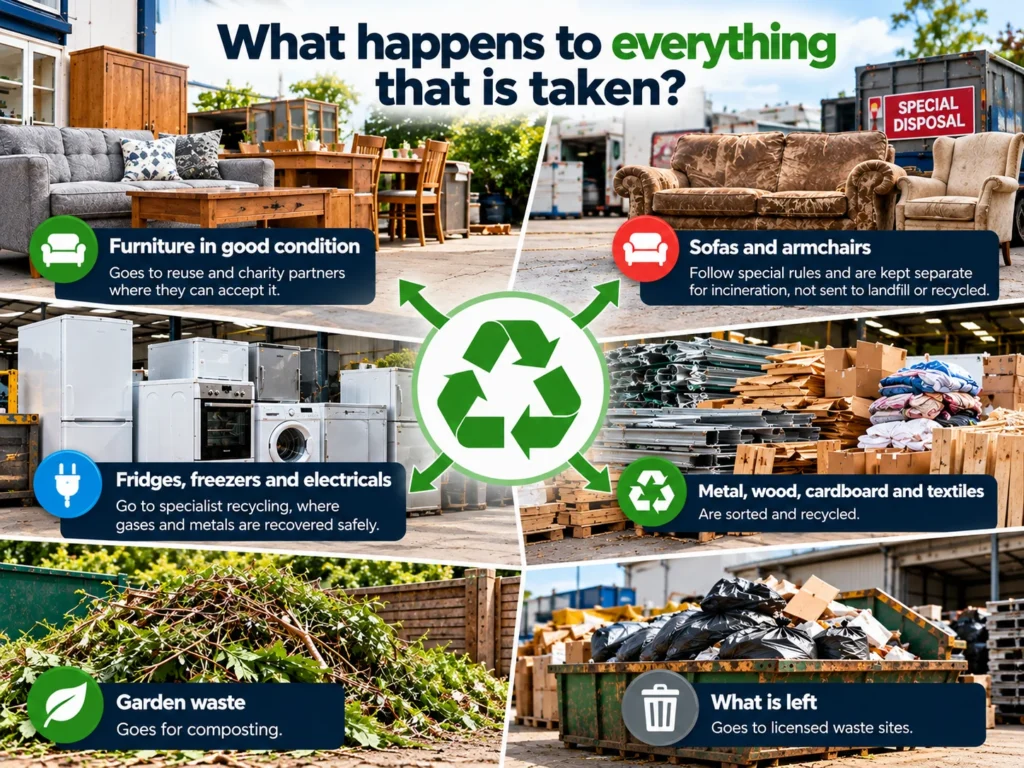
What happens to everything that is taken?
The aim is to keep as much as possible out of landfill. At House Clearance London, we recycle, donate or reuse up to 90% of what we clear. Here is how different items are handled:
- Furniture in good condition goes to reuse and charity partners where they can accept it. Charities usually need upholstered items to have a fire safety label.
- Sofas and armchairs that cannot be reused follow special rules. Since January 2023, the Environment Agency has required old upholstered seating that may contain harmful chemicals called persistent organic pollutants (POPs) to be destroyed by incineration, not sent to landfill or recycled. That is why sofas must be kept separate from other waste.
- Fridges, freezers and electricals go to specialist recycling, where gases and metals are recovered safely.
- Metal, wood, cardboard and textiles are sorted and recycled.
- Garden waste goes for composting.
- What is left goes to licensed waste sites.
There is also a new rule in 2026. From 1 October 2026, permitted waste sites in England and Wales must record the waste they receive on a national digital tracking system. It is another step to stop waste crime, and one more reason to use a licensed company whose loads are properly recorded.
What can't be taken in a house clearance?
Some items need specialist handling and cannot go in a normal clearance van. These include:
- Asbestos (often in old garage roofs, floor tiles or pipe lagging)
- Gas bottles
- Paint, solvents and garden chemicals
- Clinical waste
If you have any of these, tell us when you ask for a quote. We will explain the right way to deal with them, so the rest of the clearance can go ahead as planned. If you think something might contain asbestos, do not touch or break it. Get it checked by a licensed specialist first.
How to get ready for clearing a house in London
London homes bring their own challenges: narrow stairs, shared entrances, controlled parking and busy roads. A little planning saves time on the day.
- Take out what you want to keep. Remove photos, papers, jewellery and keepsakes first, or put them in one marked room.
- Look for paperwork. Check drawers, books and coat pockets for documents, bank cards and cash, especially after a death.
- Sort parking. Check whether your street has controlled parking. Some jobs need a parking suspension or visitor permit.
- Book the lift. Many blocks of flats need lift bookings and floor protection. Tell the building manager early.
- Think about timing. Morning slots are often easier, especially inside the Congestion Charge zone.
- Point out hazards. Mention loose floorboards, a weak loft hatch or any items we cannot take.
- Arrange keys. If you cannot be there, leave a key with a neighbour or agent. We will send photos when the job is done.
Clearing a house after someone has died
Clearing a loved one’s home is one of the hardest jobs a family faces. Go at your own pace. Before a full clear-out, executors normally secure the property, make a list of the contents and set aside anything named in the Will. It is wise to speak to the solicitor handling the estate before valuable items are removed.
When you are ready, our team works quietly and with respect. We set aside any papers, photos, cash or jewellery we find and hand them back to the family or executor. This is general guidance, not legal advice.
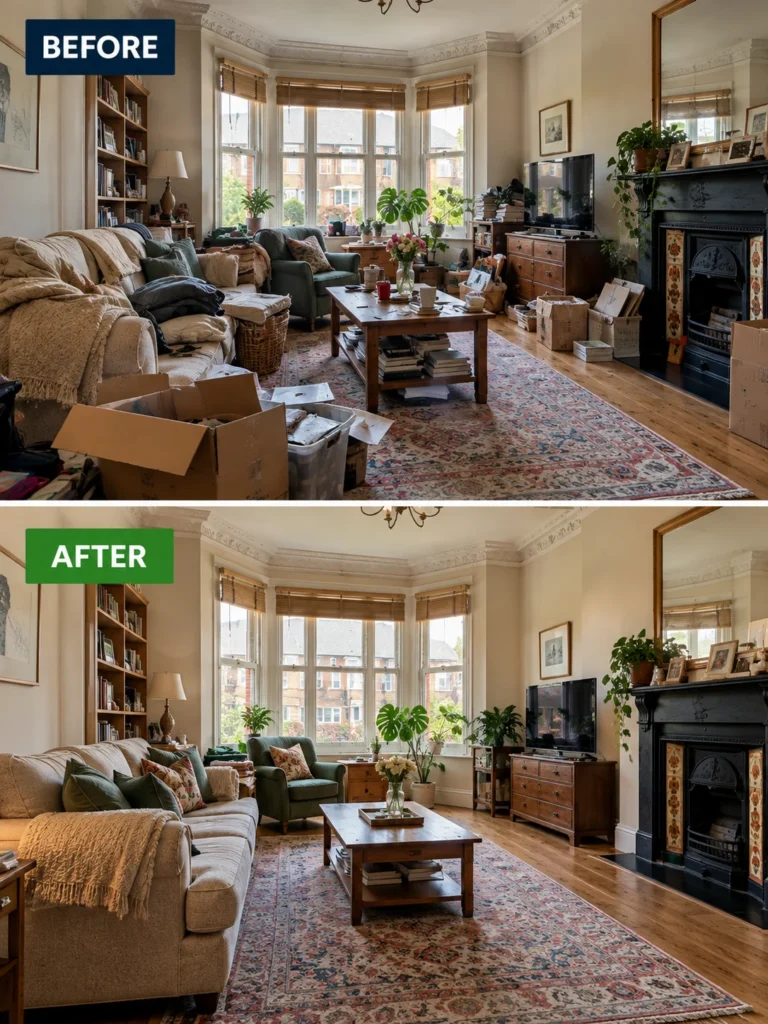
Real London clearances: what they look like
No two jobs are the same. In one week, our crews might carry a single sofa down from a fourth-floor landing in Hackney, then clear a four-bedroom house in Wandsworth with a full loft, a shed and a garage behind it.
Get your free house clearance quote
If you need a house clearance in London, send us a few photos or a short video of what needs to go. We will reply with a clear quote, usually the same day, and can often offer a same-day or next-day slot.
- Fully licensed and insured
- 10+ years of experience
- 436+ homes and businesses served
Frequently asked questions - House Clearance London Guide
How long does a house clearance take?
Most flats and small houses are cleared in a few hours. Larger homes with a loft, garage or garden can take a full day. Stairs, lifts, parking and the amount of stuff all make a difference. We will give you a time estimate when we quote, so you can plan around it.
Do I need to be there on the day?
No. Many landlords, executors and families leave a key with a neighbour, agent or concierge. We confirm what is going before we start, then send photos once the property is empty. If you prefer to be there, you are very welcome.
How much notice do you need?
Two or three days' notice is comfortable, mainly because of parking permits and lift bookings in London. Same-day clearances are often possible if you call early in the day. Morning slots fill fastest, so the sooner you get in touch, the more choice you have.
Will everything go in one visit?
Usually, yes. Very large houses with a full loft, garage and garden sometimes need a second load. We will tell you this at the quote stage, not on the day, so there are no surprises.
What happens to items that are still in good condition?
Good furniture and household items go to reuse and charity partners where they can accept them. We recycle, donate or reuse up to 90% of what we clear. Only what cannot be reused or recycled goes to licensed waste sites.
Can you take just one item?
Yes. We often collect single sofas, mattresses, fridges and washing machines on their own. You do not need a full clearance to book us. See our single item collection service.
Why do sofas need special disposal?
Many older sofas and armchairs contain fire-retardant chemicals known as POPs. Environment Agency rules say waste upholstered seating must be destroyed by incineration, not landfilled or recycled. That is why sofas are kept apart from other waste during a clearance.
How do I know a clearance company is legal?
Ask for their waste carrier registration number and check it on the Environment Agency's public register. Make sure they are insured and will give you a receipt with their details. If your waste is later dumped by an unlicensed collector, you could be fined.
Can you clear a house before probate is granted?
Executors can usually secure the home and list its contents early. Most solicitors advise waiting before a full clear-out, until valuables have been listed and valued. Speak to the solicitor handling the estate first. This is general guidance, not legal advice.
Do you clear offices and shops as well as homes?
Yes. We clear offices, shops and other business premises across London, including furniture, equipment and general waste. Businesses receive a waste transfer note for their records. See our office clearance service.
David Meadows runs House Clearance London. His team has spent more than 10+ years clearing homes, flats, offices and gardens across London, and has helped over 436+ homes and businesses so far. David makes sure every job is fully licensed and insured, priced up front with no hidden charges, and handled with care, with up to 90% of items recycled, donated or reused.